


Category · 26 posts
Everything for the ATI TEAS 7 entrance exam.
Section breakdowns, scoring, and study plans for the TEAS 7.
The ATI TEAS is four separately timed sections — Reading, Mathematics, Science and English — totalling 170 questions of which only 150 are scored. The pacing pressure is not spread evenly across them, and knowing which section gives you least time per question should decide where your study hours go.

You can take the TEAS online, but "online" covers two different arrangements — proctored by ATI or proctored by your institution — and your school decides which one you get. Before that matters, your room and hardware have to pass a check that catches out more candidates than the maths does.

Wondering if you need the TEAS for an LPN program — or if there’s a special LPN version? There isn’t. LPN, ADN, and BSN applicants all take the same ATI TEAS 7; only the required passing score differs. Here’s when the TEAS is required for LPN programs, how it differs from the NCLEX-PN, and how to prep.

The TEAS (Test of Essential Academic Skills), made by ATI, is the pre-nursing entrance exam most US programs use to screen applicants. ATI TEAS 7 has four sections — Reading, Math, Science, and English & Language Usage — and tests academic readiness, not nursing knowledge.

How hard the TEAS feels comes down to how recently you've used high-school reading, math, and science. It tests academic readiness, not nursing knowledge — so most applicants find Science (anatomy and physiology) toughest, with separately timed sections adding pressure. All of it is prep-responsive.

The ATI TEAS 7 has 170 total questions across four sections — Reading (45), Math (38), Science (50), and English & Language Usage (37) — and includes 20 unscored pretest items. That leaves 150 that count toward your score. The TEAS isn't adaptive, so everyone answers the same number.

The ATI TEAS 7 math section is 38 questions in 57 minutes on a basic on-screen four-function calculator. It tests high-school-level algebra, ratios, unit conversions, and data — not nursing dosage math. Master the high-frequency topics and the calculator rule and it becomes predictable.
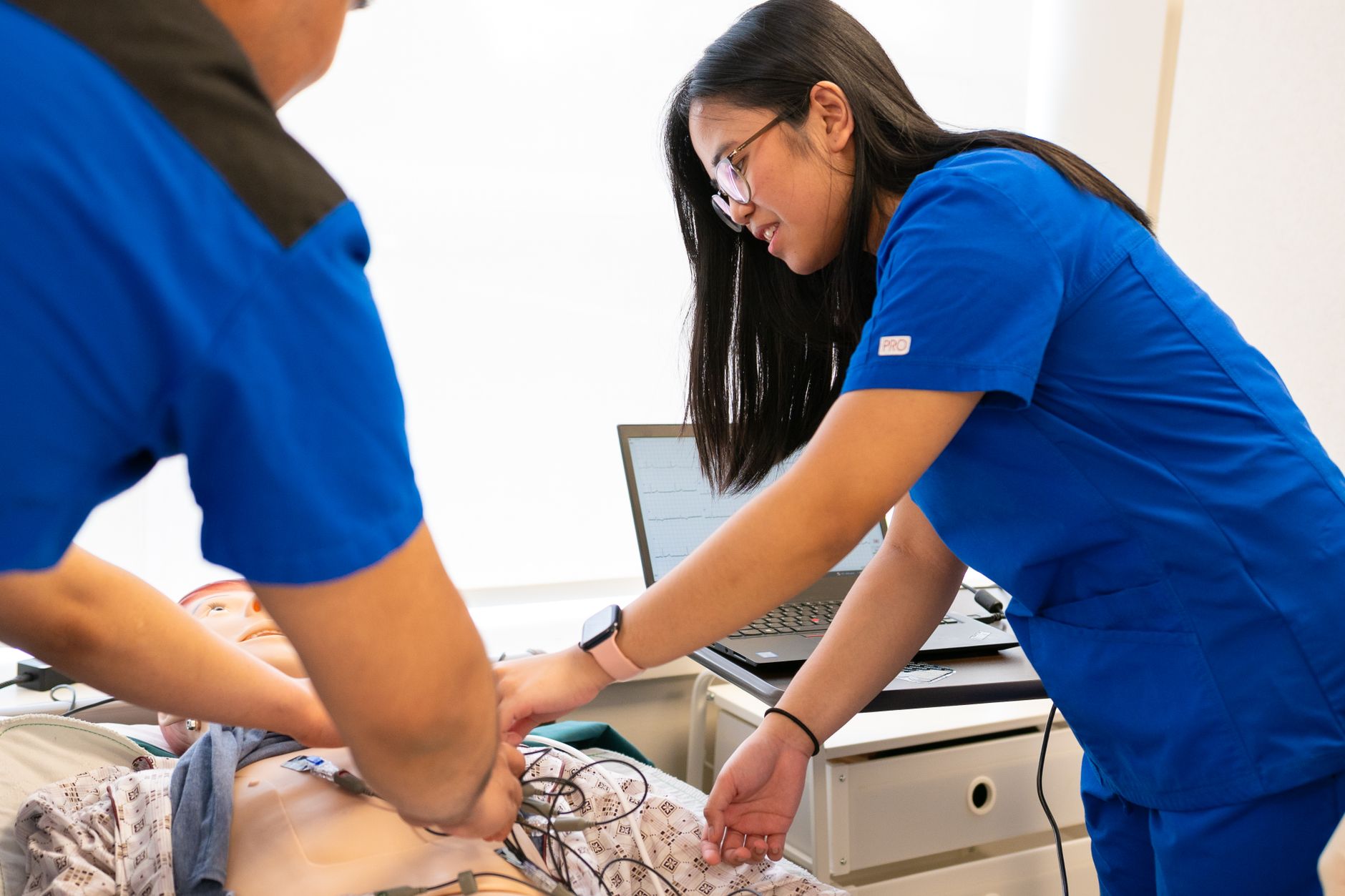
The ATI TEAS 7 science section is 50 questions in 60 minutes, with only 44 scored across anatomy & physiology (18), biology (9), scientific reasoning (9), and chemistry (8). A&P alone is 41% of the section — so prep body systems first and treat the physical sciences as targeted review.

TEAS practice questions only raise your score when you use them well. Drill by section, weight your time to your weak areas (often Science and Math), and treat the rationale — not the raw score — as the actual lesson. Full-length tests build pacing; use current ATI TEAS 7 material.

There's no single national TEAS test date. When you can test depends on the channel: ATI online with rolling availability, a PSI testing center, or your nursing school's own administration — each with its own calendar. Compare all three, book backward from your program's deadline, and book early.

Quizlet is a handy free tool for the memorization-heavy parts of the TEAS — vocabulary and anatomy & physiology terms. But its sets are user-made, so accuracy and version (TEAS 7 vs old TEAS 6) vary. And it's weak for the timed, applied practice the TEAS rewards. Use it as a supplement, not your whole plan.

The highest-yield TEAS tips: take a baseline test first and study your weakest section, keep an error log, pace each section with checkpoints, never leave a question blank, and walk in rested. Tactics that turn what you know into the score you need.